TL;DR: After a house fire, wait for the fire department’s clearance before re-entering, even if the flames are out. Don’t touch light switches or appliances until the power is confirmed safe. Photograph everything before you move or clean anything, then call your insurance company the same day. Get broken windows and doors boarded up fast, since an open structure invites weather damage, theft, and more soot migration. Most homes can be saved unless the fire caused major structural collapse, and a typical restoration timeline runs two to six weeks for moderate damage.
If the Corona Fire Department just cleared your home near Dos Lagos, Eagle Glen, or along the 91 corridor and you’re standing on the sidewalk in your pajamas at 2 a.m., you already know the flames are out. What you probably don’t know is what happens in the next hour, whether you can sleep in your own bed tonight, and what you need to do before an insurance adjuster ever shows up. Here’s the order that actually matters.
What should I do in the first hour after a house fire?
Do not re-enter the structure until fire officials formally release it to you, even if it looks stable from the curb. Structural members weakened by heat can fail hours later, and smoldering material inside walls can reignite.
Once you’re cleared to go back in briefly, don’t flip light switches or plug anything in. Heat can damage wiring insulation in ways you can’t see, and a live circuit near scorched material is a second fire waiting to happen. Let the fire department or a licensed electrician confirm the panel is safe first.
Take photos and video of every room before you touch or move a single item, including closets, the garage, and the attic if it’s accessible. This record protects your insurance claim later and it only takes ten minutes with a phone camera. The U.S. Fire Administration publishes a short post-fire checklist worth saving for exactly this reason.
Do I need to move out after a house fire?
You’ll likely need to relocate, at least temporarily, if smoke odor has saturated the home’s HVAC system, if any bedroom or exit path is structurally compromised, or if the power, water, or gas utilities are shut off. A fire doesn’t have to reach a room for that room to be unlivable; soot and smoke travel through ductwork and settle everywhere the air circulates.
Most homeowners insurance policies include Additional Living Expenses (ALE) coverage, which reimburses hotel stays, meals above your normal grocery budget, and sometimes pet boarding while the home is uninhabitable. Ask your adjuster specifically about the ALE line item and keep every receipt; this is one of the most commonly underclaimed benefits after a fire because people don’t realize it’s there.
How do I stop secondary damage after a fire?
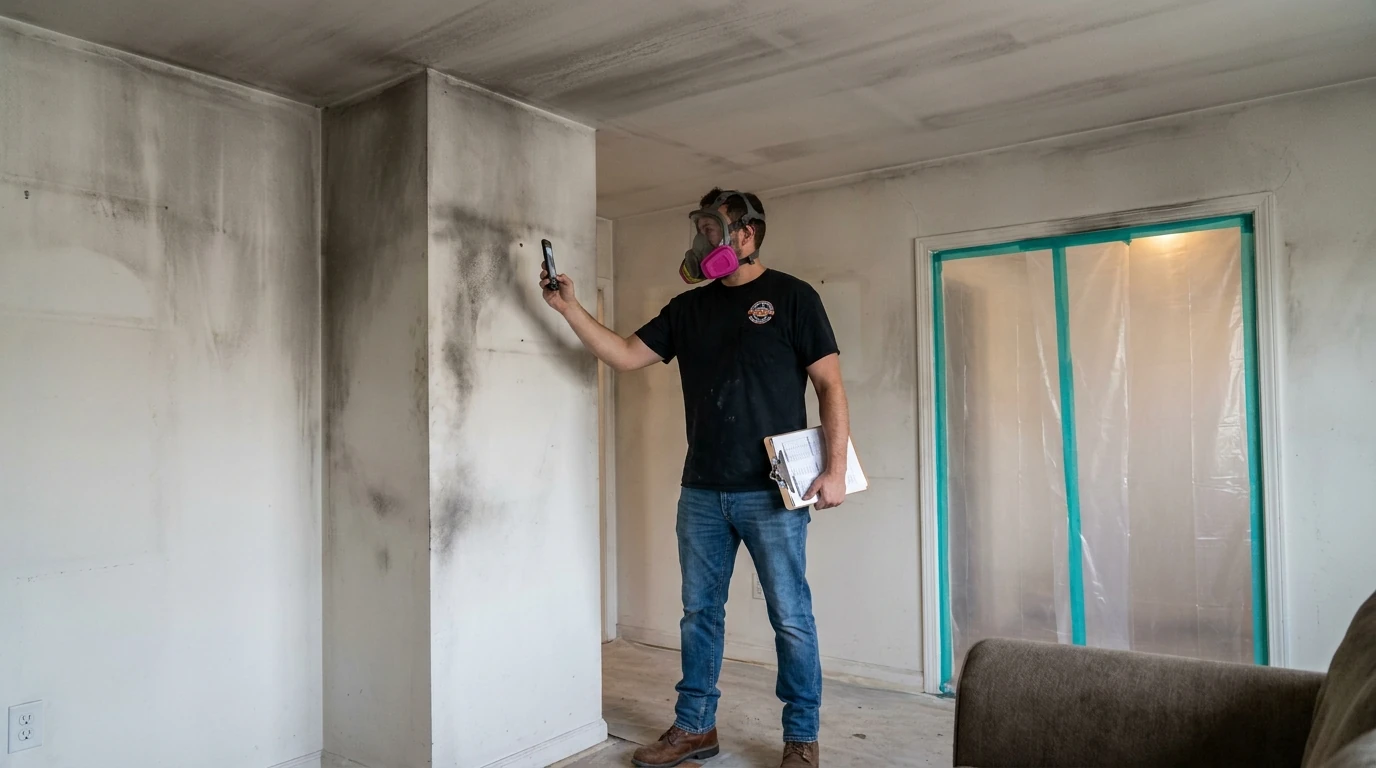
Secondary damage, meaning the damage that happens after the fire is out, usually comes from three sources: open windows and doors, water used to extinguish the flames, and soot continuing to settle on surfaces. Stopping it starts with sealing the building envelope the same day.
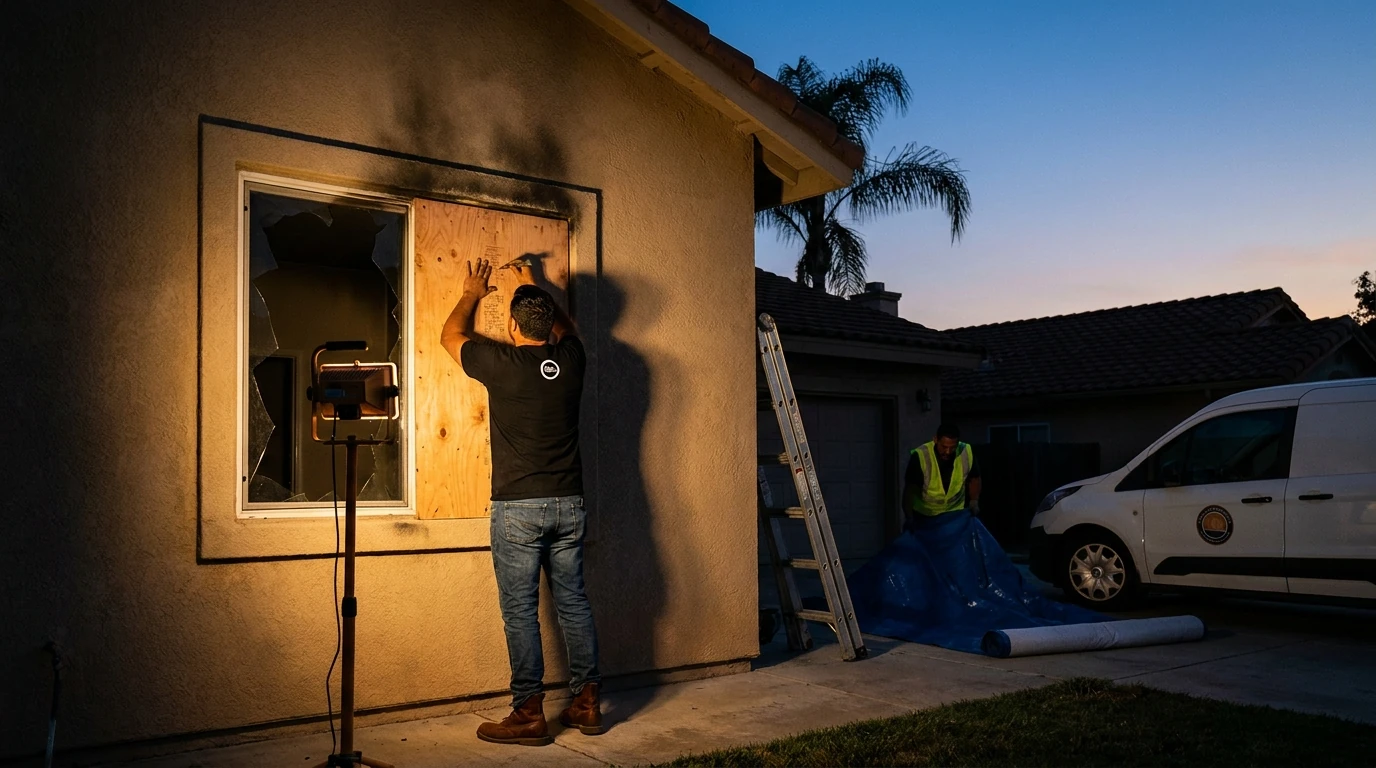
Emergency board-up covers broken windows, burned-through doors, and holes in the roof with plywood and tarping, which keeps rain, animals, and opportunistic theft out of a home that’s already vulnerable. In Corona’s dry season this also matters for wind-blown dust and ash; in the rare wet weeks, an unsealed roof means a fire loss turns into a water loss within days. Dry County Restoration dispatches board-up crews for exactly this situation, since the gap between the fire going out and the structure getting sealed is where most avoidable damage happens.
If the fire department used significant water on the structure, treat standing water and saturated carpet as its own emergency on the same timeline as the fire damage itself; our companion guide on what to do in the first 24 hours after water damage covers the extraction and drying steps that run in parallel with fire cleanup.
What do I need to document for my insurance claim?
Document the full scope of loss, room by room, before any cleanup or disposal begins, since a missing item never photographed is much harder to claim later. Walk every room with your phone, narrate what you’re seeing out loud as you film, and don’t throw anything away yet, even items that look obviously ruined.
Make a running inventory list with approximate purchase dates and values for major items: furniture, electronics, appliances. The American Red Cross has a free home inventory worksheet that’s useful here if you don’t already have one on file.
Ask your insurer whether they want to inspect contents in place before anything is moved to storage. Salvageable items, like clothing, upholstery, and electronics, often need specialized cleaning rather than replacement, and a contents restoration process that follows IICRC guidelines can recover items your adjuster would otherwise write off entirely, which keeps more of the claim working in your favor instead of against it.
Can a house be saved after a fire, and how long does restoration take?
Most homes can be saved after a fire. Total losses are the exception, generally limited to fires with major roof or floor collapse, widespread structural charring, or foundation damage from prolonged heat exposure. Smoke and soot damage, even when it looks catastrophic on move-in day, is almost always remediable.
For a contained fire affecting one or two rooms with moderate smoke spread, restoration typically runs two to four weeks: structural drying if water was used, soot and odor remediation following the IICRC S700 standard for fire restoration, then rebuild of damaged drywall, flooring, or cabinetry. A whole-floor fire with significant structural rebuild can run two to four months. Our fire damage restoration process post walks through each phase in more detail if you want the full picture before a crew arrives.
Get a written scope of work before any demolition starts, and confirm with your contractor what’s covered by the insurance estimate versus what you’re paying for out of pocket. Every fire loss is different, and a documented scope protects you from surprises on both sides.
The hardest part of the first day is simply knowing what order to do things in. Secure the structure, document everything, call your insurer, and don’t rush decisions about contents or demolition until you have that scope in writing. Call Dry County Restoration at (951) 667-9910 if you need board-up, drying, or a documented damage assessment started today.
About Dry County Restoration
Dry County Restoration is an IICRC Certified Firm serving Corona, CA and the surrounding Inland Empire since 2020 (CSLB license #1083555). Their crews handle fire damage restoration, emergency board-up and tarping, and contents restoration across the region, operating on a 24/7 basis for emergency dispatch.