Renovations, Remodels and General Contracting in Corona
24/7 renovations, remodels and general contracting in Corona and surrounding areas. IICRC-certified, insurance billing accepted. Call (951) 667-9910.
A burst pipe or a kitchen fire doesn’t just leave damage behind, it leaves a half-gutted room that no longer functions. Once the water is extracted and the soot is cleaned, you’re still standing in a space with exposed framing, missing drywall, and no working fixtures. That gap between mitigation and move-in is where renovation and general contracting work begins, and it’s where projects stall when a restoration company hands you off to a separate contractor who wasn’t there for the damage assessment. Dry County Restoration carries the project through, from the first scope of work to the final coat of paint.
What Renovations, Remodels and General Contracting actually involves
Post-damage rebuild and elective remodeling share more overlap than most homeowners expect. In both cases, the work involves demolition, structural repair or modification, rough-in trades (plumbing, electrical, HVAC), insulation, drywall, finish carpentry, tile, cabinetry, and final finishes. The difference is sequencing and documentation.
For post-damage reconstruction, every material removed has to be logged against the adjuster’s scope, what was there, what grade it was, what it costs to replace in kind. For elective remodels, a kitchen layout change, a bathroom gut-and-redo, an addition or ADU conversion, the sequencing is driven by design intent and permit timelines rather than insurance line items.
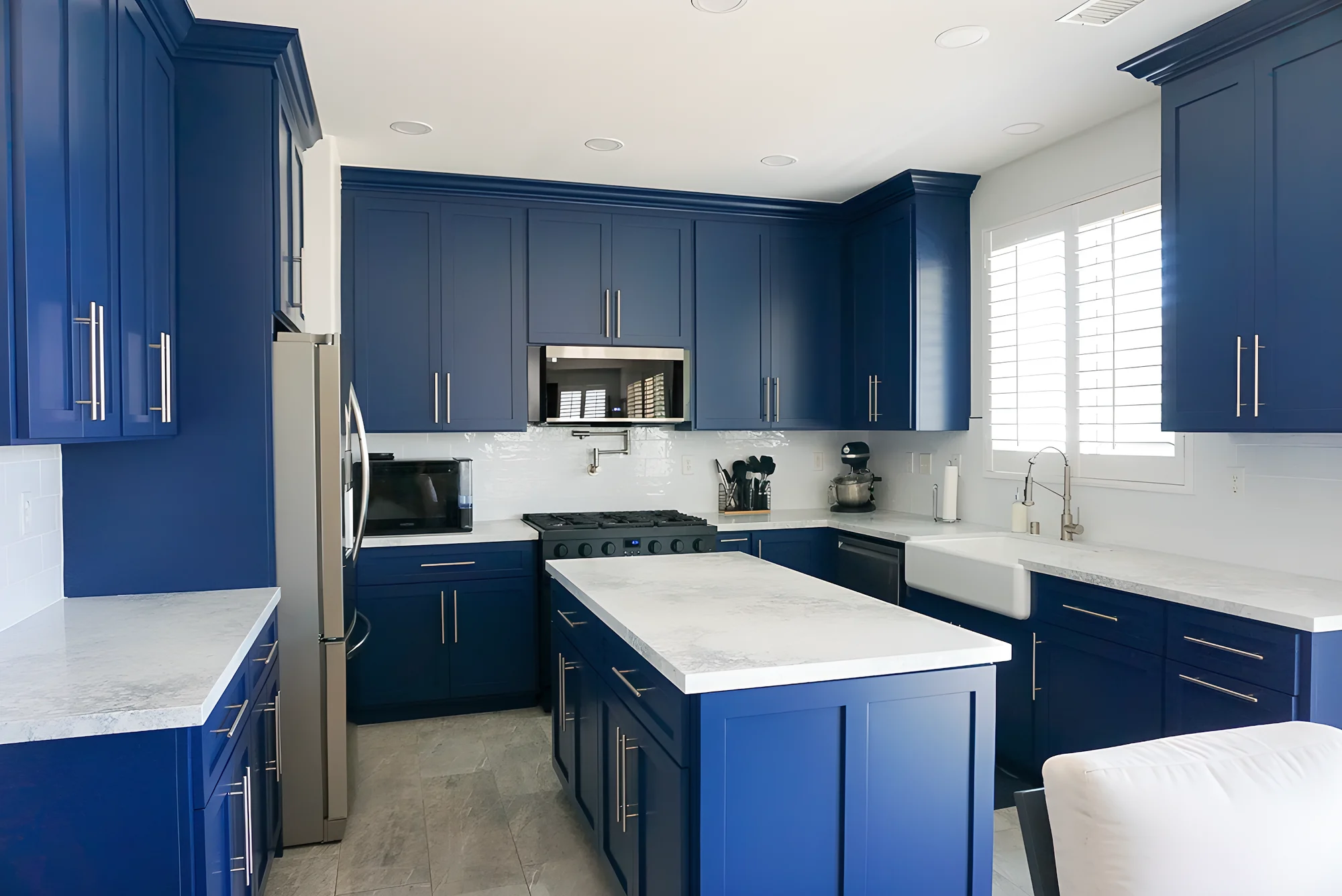
A kitchen remodel in a Corona-area home built in the 1980s or early 1990s often surfaces surprises: galvanized supply lines that have scaled down to a trickle, undersized electrical panels that can’t support modern appliances, or load-bearing walls that weren’t marked on any plan. A bathroom remodel in the same era may involve removing tile set over original mud-bed mortar, a slower demo than cement board, and one that affects the timeline. Knowing what’s behind the walls before the first swing of a demo hammer is what separates a smooth project from a costly change-order spiral.
Our process
-
Scope development and pre-construction walkthrough. Before any work is priced or scheduled, we walk the space with you. For post-damage projects, this walkthrough is coordinated with your insurance adjuster’s scope so nothing is missed and nothing is double-billed. For elective remodels, we document existing conditions, photos, measurements, material grades, so the written scope reflects what’s actually there.
-
Permitting and trade coordination. Renovation work in Corona falls under City of Corona Building and Safety permitting requirements. We pull the permits, schedule inspections, and coordinate licensed subcontractors for electrical, plumbing, and mechanical work. You don’t manage the inspection calendar, we do.
-
Structural and rough-in work. Framing repairs, load-bearing modifications, subfloor replacement, and all rough-in trades happen in sequence so inspections can be completed before walls close. This is the phase where hidden conditions, deteriorated sheathing, outdated wiring, corroded drain lines, get addressed rather than buried.
-
Insulation, drywall, and waterproofing. In Southern California’s climate, proper vapor management in bathrooms and laundry areas matters more than many homeowners realize. We install backer and waterproofing membranes to current standards before tile goes down, not as an upsell, but because a failed shower pan is the most predictable source of a future water damage claim.
-
Finish work, punch list, and final walkthrough. Cabinetry, tile, fixtures, trim, paint, and hardware are installed and inspected against the original scope. We walk the completed space with you before closing the project, and any items that don’t meet the agreed standard get corrected before we consider the job done.
What separates a good renovation response from a bad one
The most common failure point in post-damage renovation is scope creep driven by poor documentation at the handoff from mitigation to rebuild. If the mitigation crew didn’t photograph every removed material and note its grade, the rebuild contractor is guessing, and insurance adjusters don’t pay for guesses. A well-documented scope includes photos of demolished materials in place, not just after removal.
For elective remodels, the most expensive mistake is skipping the permit on structural or electrical work to save time. In Riverside County, unpermitted work surfaces at resale, title companies and buyers’ inspectors flag it, and the cost to remediate unpermitted construction almost always exceeds what the permit would have cost.
On kitchen remodels specifically, the detail that gets missed most often is ventilation: a new range hood that exhausts into the attic rather than to the exterior, or a recirculating hood installed where a ducted one was specified. It reads fine at installation and becomes a grease-and-moisture problem inside the ceiling cavity within a year or two.
Insurance adjusters look for like-for-like replacement documented with material specifications, not just line items. If your pre-loss kitchen had 42-inch upper cabinets and the rebuild scope lists standard 36-inch, that’s a depreciation dispute waiting to happen.
Seasonal and regional considerations
Southern California’s dry season brings elevated wildfire risk, and post-fire reconstruction in the Inland Empire has its own permitting and debris-clearance sequencing, county environmental requirements for ash and debris removal must be satisfied before structural rebuilding can begin. If your property was affected by a declared disaster event, there may be expedited permitting pathways available through the City of Corona or Riverside County; we track those windows and can advise on timing.
For elective remodels, the region’s heat also affects scheduling: interior finish work, paint, flooring adhesives, grout, performs best when the structure isn’t cycling through 100°F days and air-conditioned nights. Planning finish phases for fall or early spring typically produces better results and fewer callbacks.
Service area
Dry County Restoration is based in Corona and serves homeowners and property managers throughout the surrounding Inland Empire and foothill communities. The city-specific pages for renovation and general contracting services in neighboring areas link back here for the full process detail, but the crew, the license (#1083555), and the written scope process are the same regardless of which city your project is in.
If you’re looking at a damaged or outdated space and trying to figure out where to start, the right first step is a written scope, not a ballpark number over the phone. Call (951) 667-9910 to schedule your pre-construction walkthrough and get a scope of work you can actually build from.
Services We Handle
- Bathroom Remodeler
- Bathroom Remodeling
- Concrete Pouring
- Foundation Pouring
- General Contracting (Reconstruction & Renovation)
- Handyman Remodeling
- Home Repairs
- Remodeler
Frequently Asked Questions
Does homeowners insurance cover renovation and reconstruction work after a loss?
Do I need a permit for a kitchen or bathroom remodel in Corona?
How do you handle the transition from mitigation (water or fire cleanup) to the actual rebuild?
What typically causes a kitchen or bathroom remodel to go over budget?
How long does a typical post-damage room rebuild take compared to an elective remodel?
Looking for the best renovations, remodels and general contracting company in Corona?
Dry County Restoration provides licensed and insured renovations, remodels and general contracting in Corona, CA and the surrounding area, and has served local property owners since 2020. Customers rate us 5.0 out of 5 stars across 91 Google reviews. We answer calls 24/7 — call (951) 667-9910 for immediate help.
Need Renovations, Remodels and General Contracting now?
We respond 24/7 across Corona and surrounding CA cities.
Related Coverage
- Our Restoration Services
- Contact Dry County Restoration
- Renovations, Remodels and General Contracting in Anaheim
- Renovations, Remodels and General Contracting in Chino
- Renovations, Remodels and General Contracting in Chino Hills
- Renovations, Remodels and General Contracting in Fullerton
- Renovations, Remodels and General Contracting in Norco
- Renovations, Remodels and General Contracting in Ontario
- Renovations, Remodels and General Contracting in Riverside
- Renovations, Remodels and General Contracting in Santa Ana