About Dry County Restoration
Dry County Restoration has served Corona since 2020. Meet our IICRC-certified restoration team. Licensed, insured, locally owned.
Dry County Restoration was founded in 2020 with a straightforward premise: property owners across Southern California dealing with water intrusion, mold, or fire damage deserve a crew that shows up fast, explains what they’re looking at, and does the work correctly, not just quickly. The name is a bit of dry humor about a region that, despite its arid reputation, sees plenty of water damage from aging plumbing, flash flooding, and the kind of slow leaks that go unnoticed behind drywall for months.
What we do
The day-to-day reality of restoration work is less glamorous than the before-and-after photos suggest. It means arriving at a home at 2 a.m. when a water heater lets go, setting up containment in a bedroom where mold has been growing behind the baseboard since a slow leak went undetected, or walking a homeowner through what smoke residue has actually done to their HVAC system after a kitchen fire. We are available around the clock because water damage and fire damage don’t wait for business hours, and the first 24 to 48 hours after a loss are when the decisions that protect a structure get made.
A significant part of the work is coordinating with insurance carriers. We document affected materials, photograph moisture readings, and communicate directly with adjusters so that the claim process doesn’t add a second layer of stress on top of an already difficult situation.
Our certifications and licensure
The IICRC, the Institute of Inspection, Cleaning and Restoration Certification, sets the technical standards the restoration industry runs on. Holding IICRC Firm Certification means the company operates under those standards as an organization, not just as individual technicians. Our team carries specific credentials in Water Damage Restoration (WRT), Applied Structural Drying (ASD), and Applied Microbial Remediation (AMRT, covering mold). Those aren’t honorary titles, each requires passing examinations on the science of how moisture moves through building materials, how drying systems are engineered, and how microbial contamination is safely contained and removed.
Our team is also OSHA trained, which governs the safety protocols that protect both workers and occupants during remediation, particularly relevant when work involves confined spaces, respiratory hazards, or controlled demolition.
We are a licensed contractor in California (License #1083555).
Where we work
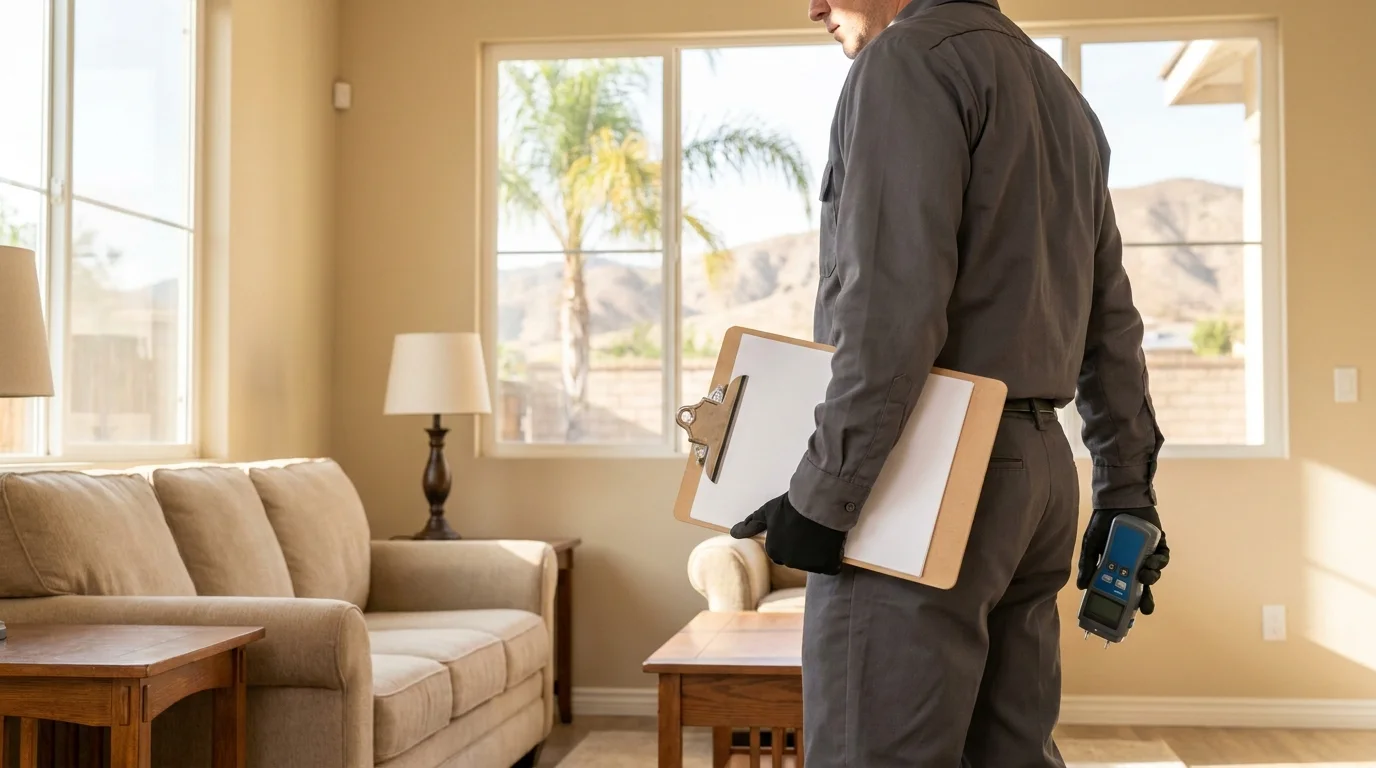
Our home base is Corona, CA, conveniently located at the corners of Riverside County, Orange County, Los Angeles County, and San Bernardino County. This location allows service throughout Southern California. The housing stock across the region spans tract homes built in the postwar boom through newer construction in master-planned communities, and each era brings its own vulnerabilities, from galvanized supply lines in older homes to slab-on-grade foundations that concentrate moisture problems at the floor level. We know the area and the building types well enough to recognize what we’re walking into before the moisture meter comes out.
Frequently Asked Questions
How long has Dry County Restoration been in business?
What cities and areas does Dry County Restoration serve?
What do the IICRC certifications actually mean for my project?
Ready to take the next step?
Get a free quote today!