Contents Restoration and Storage in Corona
24/7 contents restoration and storage in Corona and surrounding areas. IICRC-certified, insurance billing accepted. Call (951) 667-9910.
When a fire scorches the kitchen or a pipe bursts behind the laundry room wall, the structure gets most of the attention, but it’s your belongings that carry the real weight of the loss. Smoke odor embeds in upholstery fibers within hours. Soot etches porous surfaces like unfinished wood and unsealed stone within days. Floodwater warps furniture joints and seeds mold inside foam cushions before the carpet even feels dry. Contents restoration and storage is the discipline that intercepts that damage clock, removing, cataloging, cleaning, and protecting your possessions while the structure is being repaired around them.
What Contents Restoration and Storage actually involves
Contents restoration is not a cleaning service. It is a structured, documented process that begins with an itemized inventory of every affected belonging, furniture, clothing, electronics, artwork, documents, collectibles, and ends with those items returned to you in verified, pre-loss condition or replaced at documented value.
The work spans several disciplines depending on the loss type:
- Ultrasonic cleaning uses high-frequency sound waves in a cleaning solution to remove soot, smoke residue, and biological contamination from hard surfaces, metals, ceramics, and some electronics without abrasive contact.
- Ozone and hydroxyl treatment neutralizes smoke and odor molecules that have bonded to soft goods, the kind of smell that comes back weeks after a surface wipe-down.
- Freeze-drying (lyophilization) is used for water-damaged documents, photographs, and books where conventional drying would cause irreversible warping and ink bleed.
- Climate-controlled storage holds your pack-out items in a secure, humidity-regulated facility while your home is under reconstruction, preventing secondary damage from temperature swings or re-exposure to moisture.
Timeline varies by loss type and volume. A moderate smoke-affected room of contents may take one to two weeks through cleaning and deodorization. A full home pack-out after a major fire or flood, with items in off-site storage through reconstruction, can span the length of the repair project itself, sometimes two to four months.
Our process
1. On-site inventory and condition assessment Before a single item leaves the property, every belonging is photographed, logged by room, and assigned a condition code. This inventory becomes the foundation of your insurance claim documentation, a line-item record that adjusters can review and that protects you if a dispute arises over pre-loss value.
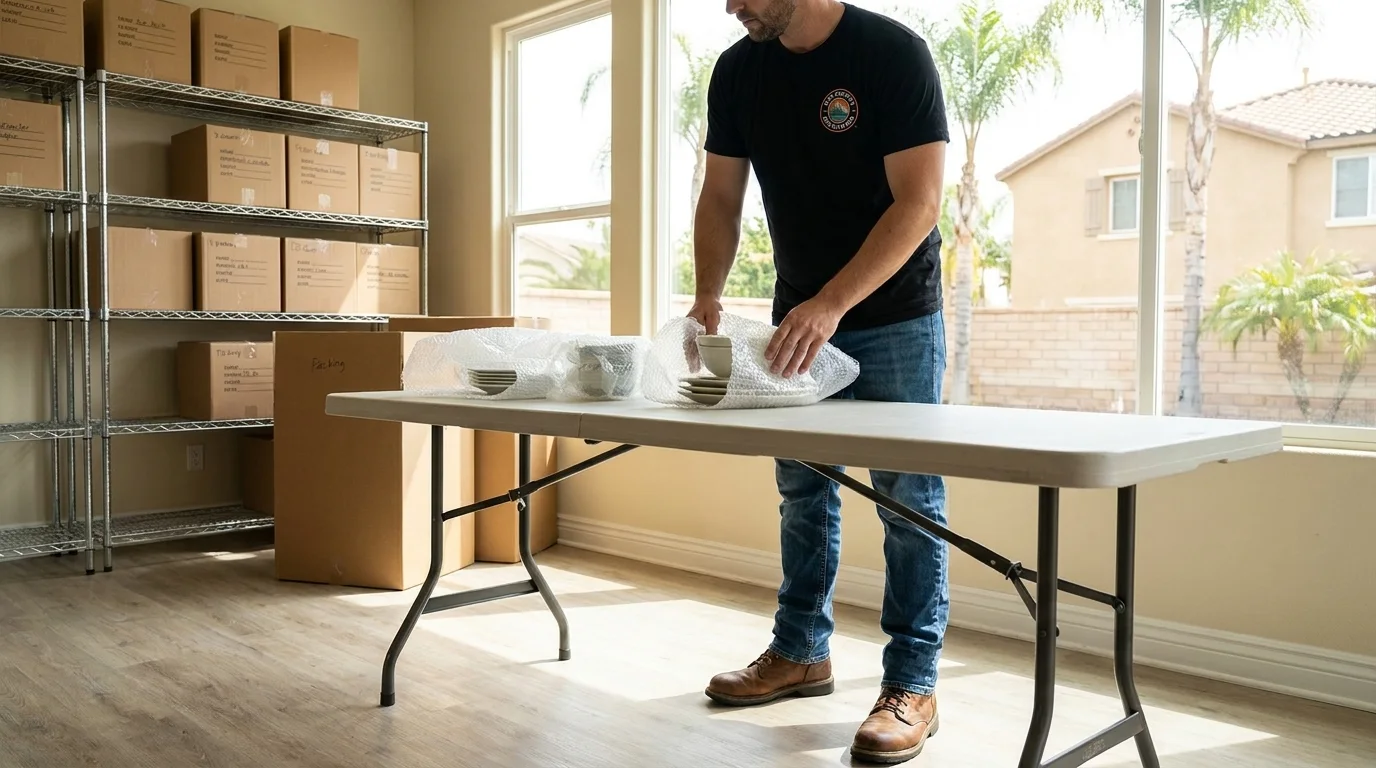
2. Pack-out and transport Items are packed using professional materials, not moving blankets thrown over furniture, with fragile and high-value items wrapped individually. Chain of custody is maintained from your front door to the storage facility. Anything that cannot be safely moved (large built-ins, certain antiques) is documented and treated in place.
3. Cleaning and restoration by material type At the cleaning facility, items are sorted by material and damage type. Porous soft goods go through deodorization and fabric cleaning. Hard surfaces go through ultrasonic or hand-cleaning protocols. Electronics are assessed by a qualified technician before any power is applied. Garments are cleaned and inspected individually. Nothing is treated with a one-size approach.
4. Climate-controlled storage Clean, restored items move into a secure, humidity-controlled storage environment. You receive a complete inventory of what is stored, and access is coordinated with your project timeline. Items are not returned to the property until the structure has passed drying or reconstruction milestones, returning belongings to a still-damp home undoes the restoration work.
5. Documented return and sign-off Delivery back to the property is matched against the original inventory. Any item that could not be restored to pre-loss condition is flagged with documentation for your insurance carrier to process as a replacement claim.
What separates a good contents response from a bad one
The most common failure in contents restoration is the absence of a proper inventory. Without a room-by-room, item-by-item log taken before pack-out, there is no baseline for the insurance adjuster, no chain of custody if an item is lost or damaged in transit, and no way to verify that everything that left the property came back.
A second frequent problem is treating all soot the same way. Protein soot, from cooking fires or low-temperature burns, is nearly invisible but leaves a powerful odor and a greasy film that standard dry-sponge methods spread rather than remove. Synthetic soot from burning plastics and building materials is heavy, oily, and chemically active; it continues to etch surfaces if left in contact. Applying the wrong cleaning chemistry to the wrong soot type causes permanent staining on fabrics and finishes that would otherwise have been salvageable.
Insurance adjusters look closely at the contents inventory for completeness and for condition documentation that justifies restoration versus replacement decisions. A well-documented pack-out, with photographs, condition codes, and cleaning logs, shortens the claims cycle and reduces the likelihood of a disputed item.
Ozone treatment applied without removing items from the space first is another common shortcut that backfires: high ozone concentrations can degrade rubber seals, bleach certain dyes, and damage electronics if exposure time is not controlled.
Seasonal and regional considerations
In the Inland Empire, the combination of dry Santa Ana wind events and older wood-frame construction in established Corona neighborhoods creates a fire-risk window that runs roughly from late summer through early winter. Smoke and soot damage from wildfires, even fires burning miles away, can infiltrate homes through HVAC systems and deposit fine particulate on surfaces throughout the interior, affecting contents in rooms that show no visible char or structural damage.
The region’s low average humidity also affects the contents restoration timeline in a less obvious way: items that absorb moisture during a water loss can dry unevenly in Southern California’s arid climate, causing wood furniture to check and crack if drying is not controlled. Proper pack-out to a climate-regulated facility protects against that secondary damage.
Service area
Dry County Restoration is based in Corona and handles contents pack-out, cleaning, and storage throughout the surrounding Inland Empire and western Riverside County, including Norco, Eastvale, Jurupa Valley, Chino Hills, Ontario, Rancho Cucamonga, and Riverside. City-specific pages for each area link back to this page for full service detail.
If your belongings have been affected by fire, water, smoke, or mold damage, call (951) 667-9910 to schedule a contents assessment, the sooner items are inventoried and moved to a controlled environment, the more can be saved.
Frequently Asked Questions
Does homeowners insurance cover contents restoration and storage?
What is a contents pack-out, and do I have to do one?
How do you handle high-value or irreplaceable items like artwork, antiques, or family photographs?
Why does smoke smell come back even after surfaces have been wiped down?
How long will my belongings be in storage, and can I access them while they are there?
Looking for the best contents restoration and storage company in Corona?
Dry County Restoration provides licensed and insured contents restoration and storage in Corona, CA and the surrounding area, and has served local property owners since 2020. Customers rate us 5.0 out of 5 stars across 91 Google reviews. We answer calls 24/7 — call (951) 667-9910 for immediate help.
Need Contents Restoration and Storage now?
We respond 24/7 across Corona and surrounding CA cities.
Related Coverage
- Our Restoration Services
- Contact Dry County Restoration
- Contents Restoration and Storage in Anaheim
- Contents Restoration and Storage in Chino
- Contents Restoration and Storage in Chino Hills
- Contents Restoration and Storage in Fullerton
- Contents Restoration and Storage in Norco
- Contents Restoration and Storage in Ontario
- Contents Restoration and Storage in Riverside
- Contents Restoration and Storage in Santa Ana