For air duct cleaning in Corona, CA, call Dry County Restoration at (951) 667-9910. The company is licensed and insured in California (license #1083555), locally owned and operated, and answers calls 24/7.
Most homeowners searching this question aren’t dealing with a true emergency. They’re dealing with a musty smell every time the AC kicks on, a layer of dust that reappears within days of cleaning, or a duct system that hasn’t been touched since the house was built. Knowing who handles what saves you a wasted call and a wasted afternoon.
When Do You Actually Need to Call a Duct Cleaning Company?
Call a duct cleaning company when the contamination is inside the ductwork itself, not just on visible surfaces. That includes visible dust buildup at the supply registers, a musty or stale odor when the HVAC runs, or debris blowing out of vents when the system starts up.
In Corona’s dry Inland Empire climate, ducts fill with fine dust and pollen faster than in wetter regions. Older homes in South Corona and around Grand Boulevard, the loop that gives the city its “Circle City” nickname, often still run original ductwork from the 1970s and 80s. That sheet metal or flex duct collects decades of debris the HVAC filter never catches.
During Southern California fire season, which runs through the fall, homes near open space and foothill-adjacent neighborhoods can pull wildfire smoke and ash directly into the return air and settle it deep in the duct run long after the smoke outside has cleared. That’s a job for a duct cleaning crew, not a can of air freshener.
If what you’re actually smelling is musty and damp, not dusty, that can point to moisture or mold growing inside the duct or at the coil, not just settled dust. That’s a different call. Our mold remediation team handles duct and coil contamination that’s biological rather than just dirt, and you can read more about what hidden mold looks like in our post on signs of hidden mold.
A plumber or general HVAC repair tech is the right call if the system itself is broken, not producing airflow, or tripping the breaker. Air duct cleaning doesn’t fix a failed blower motor or a refrigerant leak. If you’re not sure which one you’re dealing with, describe the symptom (smell vs. no airflow vs. visible debris) when you call and we’ll tell you straight whether it’s a duct cleaning job or something you need an HVAC repair company for.
What Happens When You Call
When you call, expect a short conversation about what’s happening: how long you’ve noticed the smell or dust, whether anyone in the home has new or worsening allergy symptoms, and roughly how old the HVAC system and ductwork are. That five-minute conversation is enough to schedule the right service and give you a realistic price range before anyone steps into your home.
Have a few things ready before the call. The age of your HVAC system, whether you’ve had any recent water damage, fire, or renovation work, and whether the odor is constant or only shows up when the system first turns on. Those details point the technician toward the source faster.
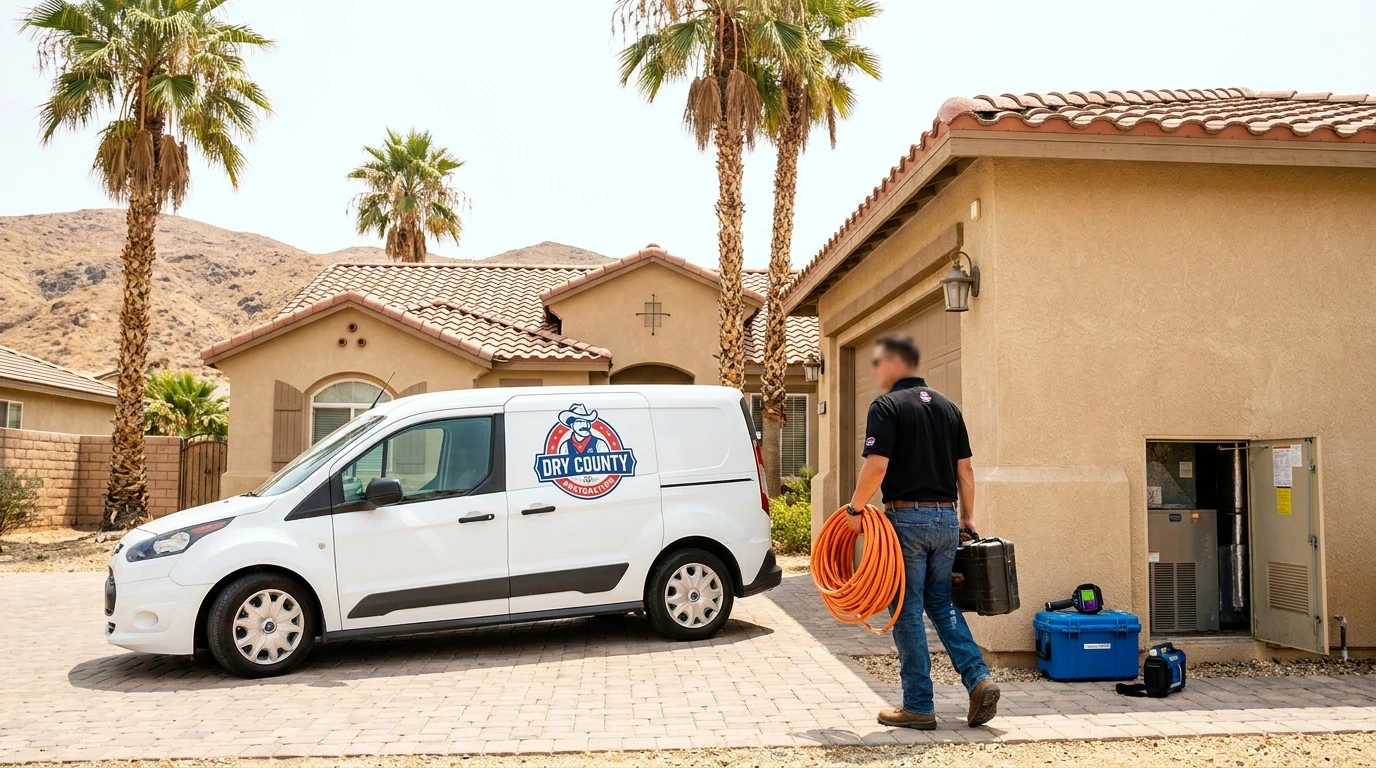
On arrival, the crew inspects the supply and return runs, the coil, and the air handler with a camera or direct visual check before recommending a full cleaning. Corona’s dry heat means dust is the most common finding; homes with recent water intrusion or roof leaks sometimes turn up something more serious inside the duct run, and the technician will flag that before starting work rather than after.
Actual cleaning uses negative-pressure equipment and rotary agitation to dislodge debris along the full length of the duct, then pulls it out through a HEPA-filtered vacuum system so it doesn’t just redistribute into the room. The registers, the coil, and the blower compartment get cleaned as part of the same visit, since dust in one area typically means dust in all of them.
What to Do Before Anyone Gets to Your Home
Turn off the HVAC system if the odor is strong or if you’re seeing visible debris coming from the vents, especially if you suspect smoke or fire residue. Running the system continues circulating whatever’s inside the ducts through the rest of the house.
Don’t run duct cleaning as a first response to unrelated air quality complaints, like seasonal allergies or a new pet in the home, without checking the ducts first. A quick phone assessment can often tell you whether cleaning will actually solve the problem before you schedule anything.
If the duct issue followed a specific event, a house fire, a roof leak, a period the home sat vacant, mention that up front. It changes what the technician expects to find and how the job gets scoped. Dry County Restoration also handles the related work these events often require, from fire damage restoration to odor removal, so one call can cover the whole picture instead of juggling separate vendors.
When the smell, dust, or debris points clearly to the ductwork itself, schedule an assessment rather than guessing at a DIY fix. A written scope before work starts means no surprises on the invoice, and it gives you documentation if the issue is tied to an insurance claim, like fire or water damage that led to the contamination.