Upholstery Cleaning in Corona
24/7 upholstery cleaning in Corona and surrounding areas. IICRC-certified, insurance billing accepted. Call (951) 667-9910.
A couch cushion can look dry on top and still hold moisture, pet odor, or ground-in soil three inches deep in the foam. That’s the part most homeowners miss when a spill, a wet dog, or years of everyday use leave upholstery looking tired even after a quick vacuum or a DIY spot clean. Fabric and leather both trap contaminants below the surface fibers, and using the wrong method can set a stain permanently or leave moisture sitting inside a cushion where mildew starts within a day or two.
What Upholstery Cleaning actually involves
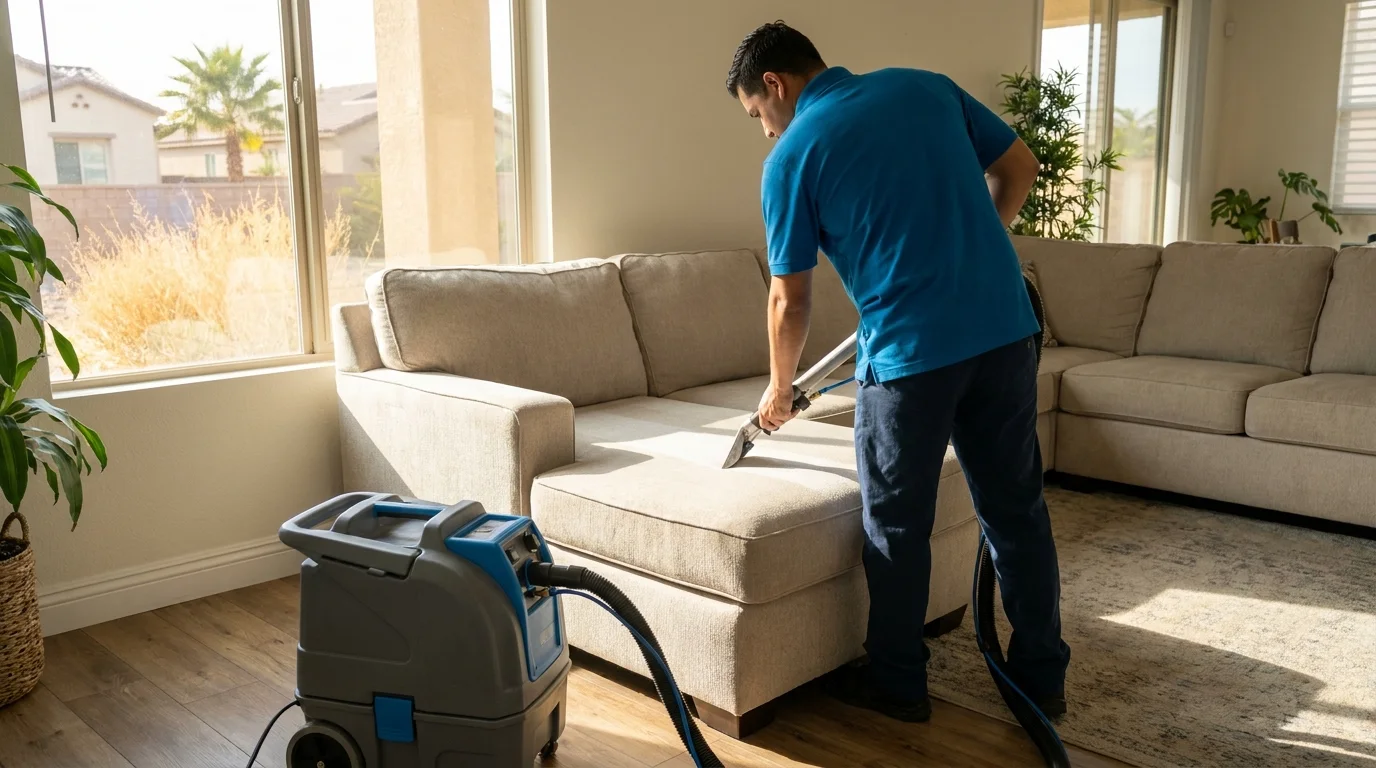
Upholstery cleaning is fabric-specific work. A microfiber sectional, a silk-blend accent chair, and a top-grain leather sofa each need a different cleaning solution, a different amount of moisture, and a different agitation method. We start by identifying the fiber content and testing for colorfastness in an inconspicuous spot, because the wrong chemistry on the wrong fabric can cause bleeding, shrinkage, or a permanent water ring. Depending on the material, cleaning is done through hot water extraction (steam cleaning), low-moisture encapsulation, or a leather-safe cleaning and conditioning process. Most single pieces are cleaned and dry to the touch within a few hours, though full drying through the cushion core can take longer in humid conditions.
Our process
- Fiber identification and pH testing. We check tags and fabric response to determine whether the piece is water-safe, solvent-cleanable, or leather, and test cleaning solution on a hidden area first.
- Pre-treatment of stains and traffic areas. Protein stains, pet accidents, and body oils get a targeted pre-treatment before the main clean, since these don’t lift with water alone.
- Cleaning method matched to the material. Fabric upholstery is typically hot water extracted to flush soil and residue out of the weave; leather is cleaned with a pH-balanced leather cleaner and hand-worked to avoid saturating the hide.
- Conditioning and grooming. Leather gets a conditioning treatment to replace oils lost in cleaning and prevent cracking; fabric pile is groomed to restore an even nap.
- Controlled drying and deodorizing. Air movers speed drying through the cushion interior, and we apply a deodorizing treatment when pet odor or smoke residue has settled into the fill, not just the surface fabric.
What separates a good upholstery cleaning response from a bad one
The most common mistake is over-wetting. Pushing too much water or cleaning solution into a cushion without adequate extraction leaves moisture trapped against the foam, and that’s exactly the environment mold needs to start colonizing inside a piece that looks fine from the outside a few days later. A second mistake is skipping the colorfastness test, which is how a well-meaning cleaning job turns into a bleached patch or a bleeding dye stain on a light-colored sofa. Leather takes a different kind of care: using an all-purpose upholstery cleaner instead of a leather-specific product strips finish and leads to cracking within months. A careful operator also groups pieces by fabric type before starting, rather than running the same method across an entire room of mixed materials, and documents pre-existing wear or damage with photos before any cleaning begins, which matters if the piece is part of a broader insurance claim tied to water or smoke damage.
What does Upholstery Cleaning cost?
Costs vary by piece size, fabric type, and how much pre-treatment a stain or odor requires. A single accent chair costs less than a full sectional, and leather conditioning adds to the price of a straightforward fabric clean. Every job gets a written scope before work starts, since the right approach for a delicate silk-blend chair looks nothing like the approach for a family room sectional that sees daily use.
| Scenario | Typical range |
|---|---|
| Single chair or ottoman | $60 - $120 |
| Standard 3-seat sofa, fabric | $120 - $250 |
| Sectional sofa | $200 - $400 |
| Leather sofa, cleaning and conditioning | $150 - $300 |
| Upholstery cleaning as part of a water or fire damage claim | Varies, often covered under the claim |
Routine upholstery cleaning for everyday wear is typically an out-of-pocket expense, but when soiling or odor results from a covered event like a pipe burst or smoke intrusion, cleaning can fall under that claim, and your homeowners policy may cover it as part of the broader restoration.
Seasonal & regional considerations
Corona’s dry heat and Santa Ana wind events push a lot of dust into homes, which settles into upholstery fibers even when furniture isn’t near an open window. Homes running swamp coolers or older HVAC systems can also see higher indoor humidity swings through summer, which slows drying time after a cleaning and makes proper extraction more important, not less. Pet ownership is high across the area’s newer master-planned communities, and pet dander and odor tend to be the most common reason homeowners call for a deep clean rather than handling it themselves.
Service area
We clean upholstery for homes and offices throughout Corona and nearby communities including Eastvale, Norco, Riverside, and Chino Hills.
If a couch, sectional, or accent chair is holding onto stains, pet odor, or a smell you can’t place, schedule an upholstery cleaning and get a fabric-safe assessment before the soil sets in any deeper. Call (951) 667-9910 to get on the schedule.
Frequently Asked Questions
Does homeowners insurance cover upholstery cleaning?
Can leather furniture be steam cleaned the same way as fabric?
How long does it take for upholstery to dry after cleaning?
Will cleaning remove old pet stains and odor completely?
How do you know which cleaning method is safe for a specific fabric?
Looking for the best upholstery cleaning company in Corona?
Dry County Restoration provides licensed and insured upholstery cleaning in Corona, CA and the surrounding area, and has served local property owners since 2020. Customers rate us 5.0 out of 5 stars across 91 Google reviews. We answer calls 24/7 — call (951) 667-9910 for immediate help.
Need Upholstery Cleaning now?
We respond 24/7 across Corona and surrounding CA cities.
Related Coverage
- Our Restoration Services
- Contact Dry County Restoration
- Upholstery Cleaning in Anaheim
- Upholstery Cleaning in Chino
- Upholstery Cleaning in Chino Hills
- Upholstery Cleaning in Eastvale
- Upholstery Cleaning in Fontana
- Upholstery Cleaning in Fullerton
- Upholstery Cleaning in Jurupa Valley
- Upholstery Cleaning in Lake Mathews
- Upholstery Cleaning in Montclair
- Upholstery Cleaning in Norco
- Upholstery Cleaning in North Tustin
- Upholstery Cleaning in Ontario