24/7 Emergency Smoke Damage Restoration in Corona
24/7 emergency smoke damage restoration in Corona and surrounding areas. IICRC-certified, insurance billing accepted. Call (951) 667-9910.
Smoke damage emergency in Corona? We answer 24/7, and the clock matters more than most homeowners realize. Soot is acidic, and the longer it sits on drywall, countertops, and HVAC components, the deeper it etches into the surface and the harder it is to lift without refinishing everything underneath. A fire two rooms away can leave the rest of the house smelling like an ashtray within hours, with residue working its way into closets, ductwork, and upholstery you never saw near the flames.
What Smoke Damage Restoration actually involves
Smoke damage restoration is a different discipline from fire damage repair, even though the two often overlap on the same job. Fire repair deals with structural loss: burned framing, melted wiring, collapsed drywall. Smoke damage restoration deals with everything the fire touched but didn’t destroy, which is usually a much larger footprint. That means identifying soot type (dry protein soot from a kitchen fire behaves differently than wet synthetic soot from burning plastics or foam), neutralizing the smell at the source rather than masking it, and cleaning or replacing porous materials that have absorbed odor molecules. Equipment typically includes HEPA air scrubbers, thermal foggers, ozone or hydroxyl generators depending on the severity, and dry-chemical sponges for delicate surfaces. A single-room smoke event with HVAC involvement can take two to four days from initial cleaning through final deodorization; whole-house jobs run longer, especially when soft contents need to be pulled, cleaned offsite, and returned.
Our process
- Soot characterization. We identify whether residue is dry, wet, or protein-based, since the wrong cleaning agent can smear soot deeper into a surface instead of lifting it.
- Containment and pre-cleaning. We seal off affected zones to stop soot migration through air handlers and open doorways before any cleaning begins.
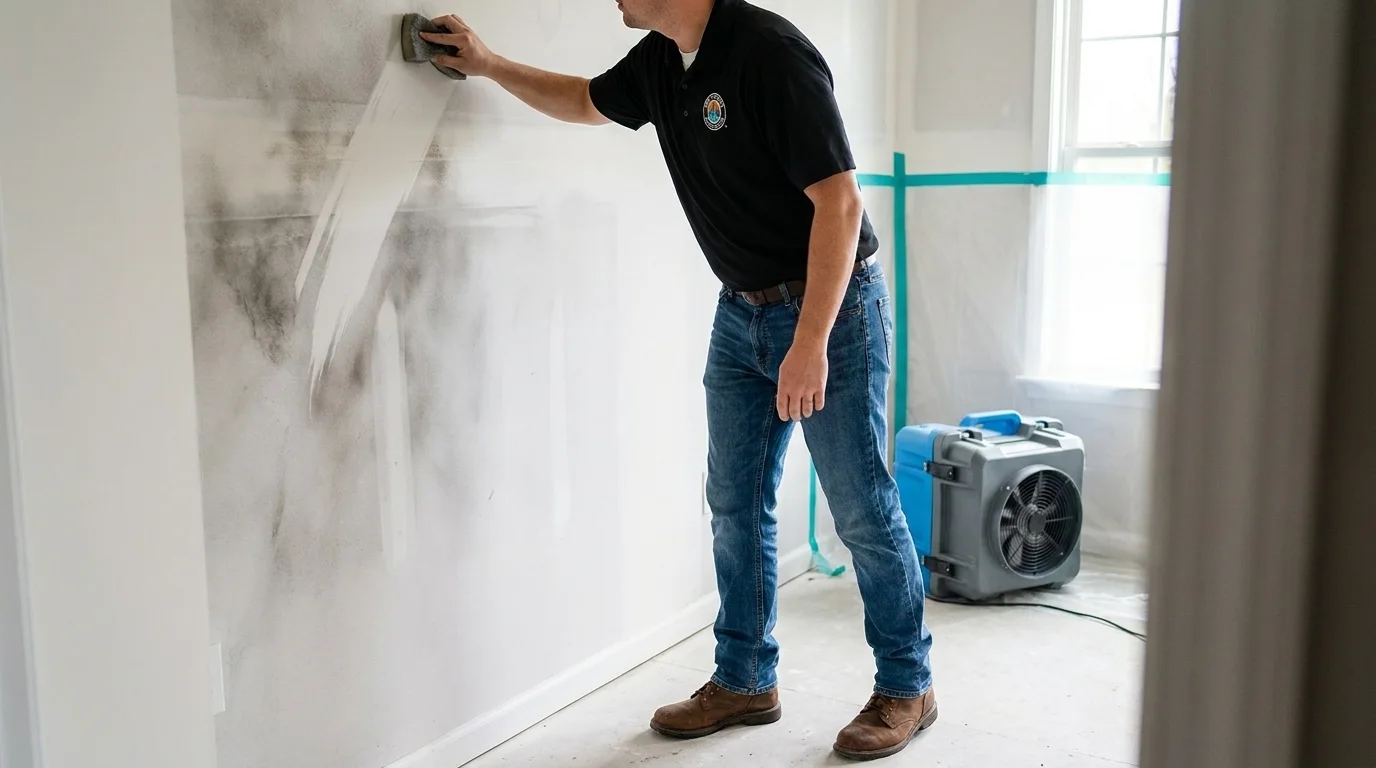
- Surface and content cleaning. Hard surfaces, HVAC components, and salvageable contents are cleaned with method-matched techniques, dry sponging, wet wiping, or ultrasonic cleaning for smaller items.
- Thermal fogging and odor neutralization. Heat-based fogging drives deodorizing agents into the same pores and fibers the smoke penetrated, rather than leaving a surface-level air freshener effect.
- Air quality verification. We run air scrubbers through final stages and confirm odor and residue levels before calling a space clear.
What separates a good Smoke Damage Restoration response from a bad one
The most common mistake is treating smoke damage like a cleaning job instead of a chemistry problem. Soot is acidic and corrosive, and generic all-purpose cleaners can set a stain permanently instead of removing it, especially on painted drywall and unsealed grout. Another frequent miss is ignoring the HVAC system entirely; if the air handler ran during or shortly after the fire, soot gets pulled through ductwork and redistributed throughout the house every time the system cycles, which means a clean-looking living room can still smell like smoke a week later. Adjusters also pay close attention to documentation of pre-existing versus fire-related damage, photo logs of affected rooms, and whether contents were properly inventoried before cleaning or pack-out. An IICRC Certified Firm follows documented protocols for each of these steps, which matters both for the quality of the work and for how cleanly the claim moves through your carrier.
What does Smoke Damage Restoration cost?
Costs vary widely based on soot type, how far the smoke traveled, and whether HVAC or contents cleaning is involved. These are typical industry ranges, not a quote; every loss is different, and Dry County Restoration provides a written scope before any work begins. Homeowners insurance typically covers smoke damage restoration when it results from a covered fire event, though coverage details depend on your policy.
| Scenario | Typical range |
|---|---|
| Single room, light surface soot | $500 - $1,500 |
| Single room with HVAC involvement | $1,500 - $3,500 |
| Whole-house smoke odor, no major fire damage | $3,000 - $8,000 |
| Contents cleaning and deodorization (per room) | $300 - $900 |
| Severe protein or synthetic soot, multi-room | $6,000 - $15,000+ |
Seasonal & regional considerations
Wildfire smoke is a recurring concern across Riverside County, particularly during late summer and fall when Santa Ana winds push smoke and ash from regional fires into the Corona area even when the fire itself is miles away. That exterior smoke can infiltrate homes through attic vents, window seams, and HVAC intake, leaving a fine ash layer and lingering odor without any flame ever touching the property. Homes with older or poorly sealed ductwork tend to show heavier odor retention after these events, which is worth checking even if you didn’t have a fire of your own.
Service area
Dry County Restoration handles smoke damage restoration and wildfire smoke cleanup throughout Corona and the surrounding Riverside County communities, including homes affected by nearby wildfire smoke infiltration as well as structure fires.
If your home still smells like smoke days after a fire, or wildfire smoke has settled into your ductwork and furnishings, call (951) 667-9910 to begin smoke and soot removal before the odor sets permanently into your walls and contents.
Services We Handle
- Repair Smoke Damage
- Smoke Damage Mitigation
- Soot Removal
Frequently Asked Questions
Does homeowners insurance cover smoke damage restoration?
Why does my house still smell like smoke after I've cleaned everything?
What's the difference between protein soot and synthetic soot?
Can wildfire smoke damage my home even if the fire never reached my property?
Should I clean smoke residue myself before a restoration crew arrives?
Looking for the best smoke damage restoration company in Corona?
Dry County Restoration provides licensed and insured smoke damage restoration in Corona, CA and the surrounding area, and has served local property owners since 2020. Customers rate us 5.0 out of 5 stars across 91 Google reviews. We answer calls 24/7 — call (951) 667-9910 for immediate help.
Need Smoke Damage Restoration now?
We respond 24/7 across Corona and surrounding CA cities.
Related Coverage
- Our Restoration Services
- Contact Dry County Restoration
- 24/7 Emergency Smoke Damage Restoration in Riverside
- 24/7 Emergency Smoke Damage Restoration in Silverado
- 24/7 Emergency Smoke Damage Restoration in Temescal Valley
- 24/7 Emergency Smoke Damage Restoration in Trabuco Canyon
- The Fire Damage Restoration Process, Explained