Carpet Cleaning in Corona
24/7 carpet cleaning in Corona and surrounding areas. IICRC-certified, insurance billing accepted. Call (951) 667-9910.
Carpet fibers trap more than dirt, they hold pet dander, bacteria, mold spores, and the residue from whatever spilled six months ago that you thought came out. Over time, foot traffic grinds that contamination deeper into the pile, past what a vacuum can reach, until the carpet starts to smell stale, look flat, and feel rough underfoot. Professional deep cleaning reverses that cycle, but only when the right chemistry, equipment, and dwell times are matched to your specific fiber type and soil load.
What carpet cleaning actually involves
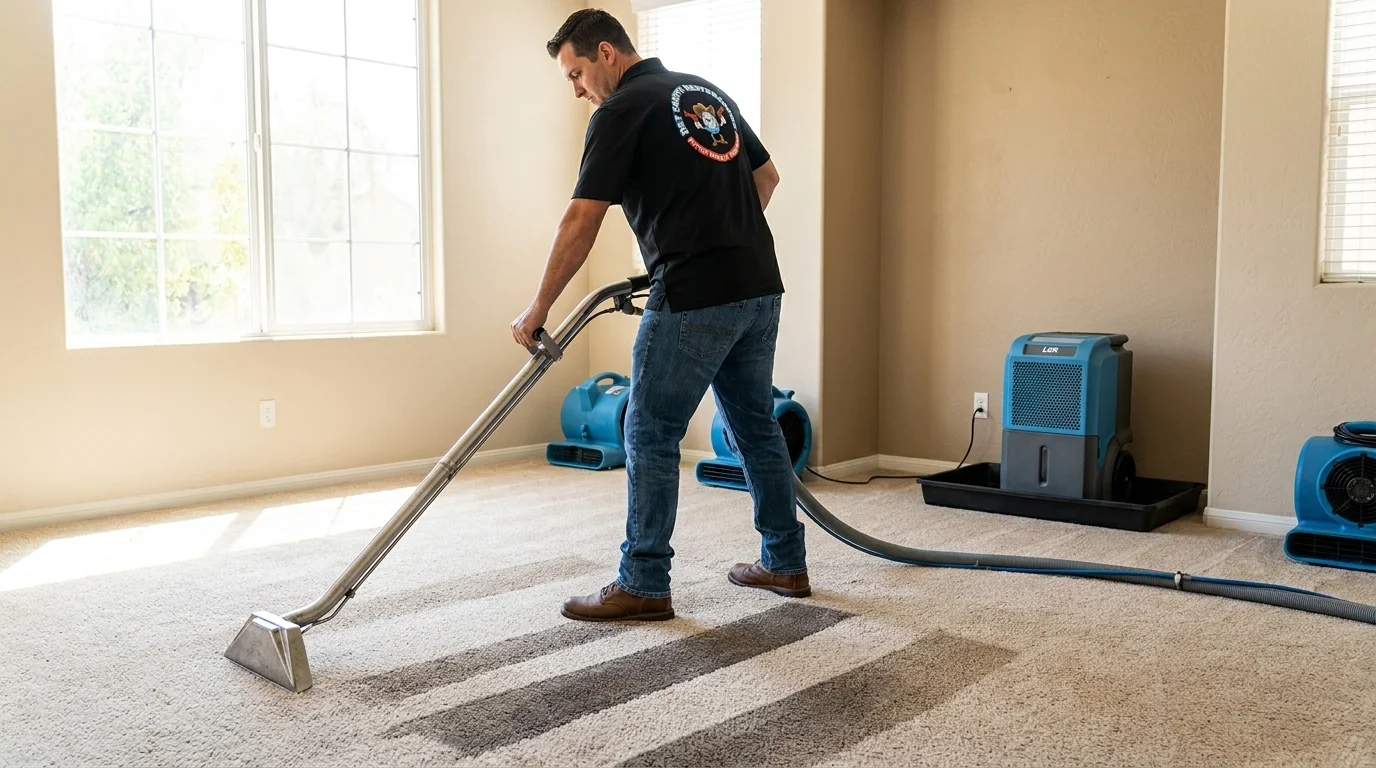
A thorough carpet cleaning job is not a single pass with a rental machine. The equipment matters: truck-mounted hot-water extraction systems generate water temperatures and suction levels that portable units cannot match, which means faster dry times and more complete soil removal. But equipment alone does not determine the outcome, the pre-treatment chemistry, the agitation method, and the technician’s ability to read the carpet’s fiber type (nylon, polyester, wool, olefin) all change what gets used and how long it stays on the surface before rinsing.
For heavily soiled areas or rooms with pet contamination, the process also involves an enzyme pre-spray that breaks down protein-based soils and odor compounds at the molecular level before extraction begins. Dry times with truck-mounted extraction typically run two to four hours under normal airflow conditions in Southern California’s low-humidity climate, though thicker cut-pile carpets and heavily saturated areas take longer. Carpet sanitization, applying an EPA-registered antimicrobial after extraction, is a separate step, not something that happens automatically with cleaning, and it matters most in homes with pets, young children, or anyone with respiratory sensitivities.
Our process
-
Pre-inspection and fiber identification, Before any water or chemistry touches the carpet, the technician walks the space, identifies fiber type and construction, notes existing damage (delamination, color loss, permanent staining), and sets realistic expectations. Wool and natural-fiber rugs require different chemistry than synthetic broadloom; skipping this step causes shrinkage, color bleeding, and browning.
-
Dry soil removal and pre-vacuuming, Heavy dry soil is removed before moisture is introduced. Wetting a carpet that still holds loose grit turns that grit into abrasive mud that works deeper into the pile during agitation. Commercial-grade HEPA vacuuming at this stage removes what extraction later cannot.
-
Pre-treatment and dwell time, Traffic-lane pre-conditioner is applied and allowed to dwell, typically 5 to 10 minutes, so the surfactants can suspend oily soils. Stain-specific treatments (protein, tannin, oil-based, dye stains) are applied individually. Rushing dwell time is the most common shortcut that produces mediocre results.
-
Hot-water extraction, Truck-mounted extraction flushes the pre-treatment and suspended soils out of the pile with high-temperature water and high-vacuum recovery. Multiple passes in opposing directions ensure thorough rinsing. A final rinse with a pH-balancing agent prevents rapid re-soiling caused by residual alkaline detergent left in the fiber.
-
Post-cleaning inspection and grooming, The technician walks the carpet wet to identify any remaining spots, applies targeted post-treatments where needed, and grooms the pile with a carpet rake to lift crushed fibers and promote even drying. Air movers are positioned when faster dry times are needed.
What separates a good carpet cleaning from a bad one
The most common failure mode in carpet cleaning is over-wetting, applying more water than the equipment can recover, which saturates the backing and padding underneath. When moisture reaches the backing and sits, you get two problems: the carpet browns as wicking pulls soil from the base of the fiber back to the surface as it dries, and the padding becomes a reservoir for mold growth within 24 to 48 hours. A carpet that smells worse a week after cleaning than it did before is almost always an over-wetting problem.
A second common issue is improper pH management. Alkaline pre-treatments that are not fully rinsed leave a sticky residue in the fiber that attracts dirt faster than an uncleaned carpet would. Experienced technicians check the pH of the extracted water toward the end of the rinse pass to confirm the chemistry has been flushed out.
For commercial carpet cleaning, pile distortion from high foot traffic and improper rotary machine use is a separate concern, rotary scrubbers that work well on tile can permanently distort carpet pile and cause fuzzing. Wand-based extraction or low-moisture encapsulation methods are typically more appropriate for commercial broadloom.
On insurance claims involving water damage, adjusters look for documentation that distinguishes pre-existing soil and staining from damage caused by the loss event, photographs taken before cleaning begins are part of a complete claim file.
Seasonal and regional considerations
Corona sits in the Inland Empire, where summer temperatures routinely push past 100°F and relative humidity drops well below 20 percent on many days. That low humidity is an advantage for drying times, carpets that would take six hours to dry in a coastal climate often dry in two to three hours here with good airflow. The tradeoff is that dry, dusty conditions mean fine particulate, including construction dust from the area’s ongoing residential development, accumulates in carpet fibers faster than in wetter climates. Homes near the 15 or 91 freeway corridors tend to see heavier particulate loading from diesel traffic. Spring and fall Santa Ana wind events push additional dust and allergens indoors, making post-season cleaning a practical choice for households with allergy or asthma concerns.
Service area
Dry County Restoration is based in Corona and serves the surrounding Inland Empire and western Riverside County communities, including Norco, Eastvale, Chino Hills, Jurupa Valley, Riverside, and Ontario. Dedicated service pages for each city are linked from the main service area section of this site.
If your carpet has been affected by a water loss, pet contamination, or years of compacted soil, call (951) 667-9910 to schedule your carpet cleaning assessment, and get a written scope before a drop of water hits the floor.
Services We Handle
- Carpet & Upholstery Cleaning
Frequently Asked Questions
Does homeowners insurance cover carpet cleaning?
Why does my carpet smell worse after it was cleaned than it did before?
What is the difference between hot-water extraction and steam cleaning?
How long should I stay off the carpet after cleaning, and what speeds up drying?
Can carpet stains that have been there for years actually be removed?
Looking for the best carpet cleaning company in Corona?
Dry County Restoration provides licensed and insured carpet cleaning in Corona, CA and the surrounding area, and has served local property owners since 2020. Customers rate us 5.0 out of 5 stars across 91 Google reviews. We answer calls 24/7 — call (951) 667-9910 for immediate help.
Need Carpet Cleaning now?
We respond 24/7 across Corona and surrounding CA cities.