Basement Remodeling in Corona
24/7 basement remodeling in Corona and surrounding areas. IICRC-certified, insurance billing accepted. Call (951) 667-9910.
A finished basement in Corona only stays finished if the moisture problem underneath it gets solved first. Because true basements are uncommon in this part of Riverside County, most of the below-grade or partially below-grade spaces we’re asked to remodel are either hillside walkout levels, converted crawlspaces, or rooms that were damaged by a prior leak and need to be rebuilt properly, not just patched. If your basement smells musty after rain, the drywall near the floor feels soft, or a prior contractor skipped the vapor barrier, remodeling on top of that problem just hides it for a season.
What Basement Remodeling actually involves
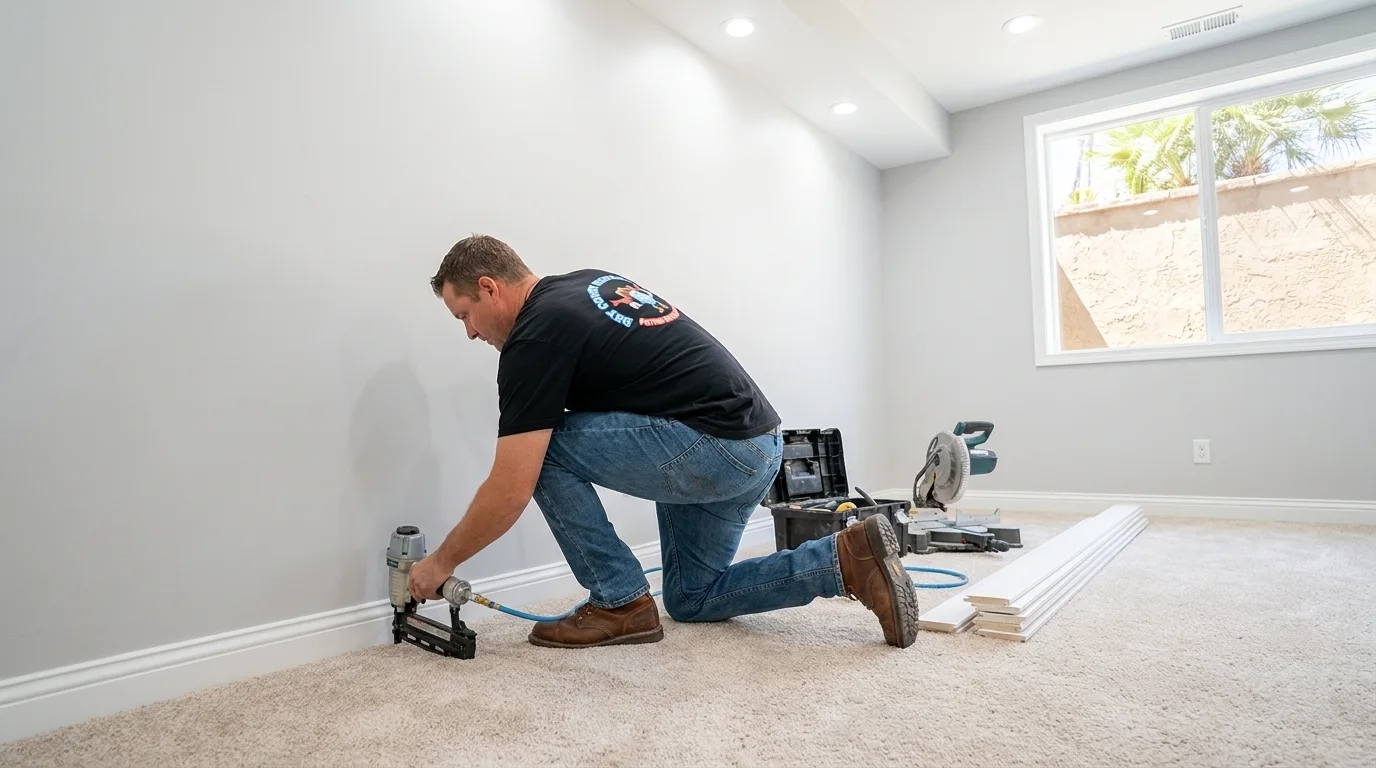
Basement remodeling here typically falls into two categories: finishing a raw or partially built space for the first time, or rebuilding a space after water intrusion, mold remediation, or structural drying has cleared it for reconstruction. Either way, the work starts below the surface, not above it. That means evaluating the slab or foundation wall for moisture migration, confirming drainage and grading outside the structure, and only then moving into framing, electrical and plumbing rough-in, insulation, drywall, and finish work. Timelines run from a few weeks for a straightforward room conversion to two or three months for a basement with a bathroom addition, egress window, or structural repair tied to a prior loss. Equipment on a remodeling job includes moisture meters to check subfloor and wall readings before any framing goes up, not just at the start.
Our process
- Scope of work and design. We walk the space, take moisture readings at the slab and foundation walls, and put together a written scope that covers layout, materials, and any permit needs before a single wall goes up.
- Permitting. Egress windows, electrical circuits, plumbing additions, and in some cases HVAC changes require permits through the local building department. We pull what’s needed rather than guessing which items don’t apply.
- Moisture control and waterproofing. This is the step that gets skipped most often. Sump pump condition, perimeter drains, vapor barriers against foundation walls, and exterior grading all get addressed before insulation and drywall trap moisture behind finished surfaces.
- Framing, rough-in, and insulation. Walls go up using moisture-resistant materials where the space calls for it, with electrical and plumbing roughed in to code before anything gets closed up.
- Finish work and final walkthrough. Drywall, flooring, trim, and paint complete the space, followed by a walkthrough where we confirm moisture readings are stable before calling the job done.
What separates a good basement remodeling job from a bad one
The most common failure we see in basements that were remodeled by someone else is finish work going in over an unresolved moisture source. Carpet, laminate, or untreated drywall installed directly against a damp foundation wall will mold within a season, sometimes faster in Corona’s wetter winter months. A careful remodel treats the vapor barrier and drainage plan as part of the job, not an upsell. Insurance adjusters evaluating a basement loss tied to remodeling also look for documentation: moisture readings before and after waterproofing, photos of the vapor barrier installation, and permits for any structural or electrical changes. Jobs that skip this paperwork tend to get disputed if a similar leak happens again later.
What does Basement Remodeling cost?
Costs vary widely based on square footage, whether plumbing or an egress window is involved, and whether the space needs moisture remediation before finish work can begin. These are typical industry ranges, not a quote: every basement is different, and Dry County Restoration provides a written scope of work with firm pricing before any work starts. Homeowners insurance generally does not cover basement remodeling as a standalone project, but it may cover the portion of the work tied to a covered water or fire loss, such as replacing materials damaged by a burst pipe.
| Scenario | Typical range |
|---|---|
| Basic finish, single room, no plumbing | $8,000 - $18,000 |
| Family room conversion with electrical | $15,000 - $35,000 |
| Basement with bathroom addition | $25,000 - $55,000 |
| Egress window addition | $3,500 - $9,000 |
| Remodel following water damage or mold remediation | $10,000 - $40,000+ |
Seasonal & regional considerations
Corona’s clay-heavy soil swells during the winter rainy months and contracts through the long dry summer, which puts repeated pressure on foundation walls and slab joints in homes with below-grade or partially below-grade rooms. Remodeling work scheduled right before the rainy season benefits from waterproofing steps being verified while drainage conditions outside the home can still be observed and adjusted if needed.
Service area
We take on basement remodeling projects in Corona and throughout the surrounding area, including Eastvale, Norco, Riverside, and Lake Elsinore, with particular attention to hillside and foothill properties where grading and drainage play a bigger role in the finished result.
If you’re planning a basement remodel or rebuilding a space after a water or mold loss, get a reconstruction scope of work from a licensed team that checks moisture conditions before framing goes up. Call Dry County Restoration at (951) 667-9910 to schedule a walkthrough.
Frequently Asked Questions
Does homeowners insurance cover basement remodeling?
Do I need a permit to add an egress window to my basement?
How do you know if a basement is dry enough to remodel?
What's different about remodeling a basement after a water damage claim versus a standard remodel?
What flooring holds up best in a below-grade or partially below-grade room?
Looking for the best basement remodeling company in Corona?
Dry County Restoration provides licensed and insured basement remodeling in Corona, CA and the surrounding area, and has served local property owners since 2020. Customers rate us 5.0 out of 5 stars across 91 Google reviews. We answer calls 24/7 — call (951) 667-9910 for immediate help.
Need Basement Remodeling now?
We respond 24/7 across Corona and surrounding CA cities.