24/7 Emergency Water Damage Restoration in Villa Park
24/7 emergency water damage restoration in Villa Park, CA. IICRC-certified, insurance billing accepted. Call (951) 667-9910.
Our IICRC-certified technicians are dispatched from our Corona, CA headquarters and are typically on-site in Villa Park within about 2 hours of your call.
Water damage emergency in Villa Park? We answer 24/7, any day of the week, including holidays. Villa Park’s hillside lots and equestrian-zoned properties often sit on slab foundations with long runs of supply line feeding detached garages and barns, which means a slab leak or irrigation line break can go unnoticed for days before it surfaces as a wet patch in a hallway or a soft spot near a foundation wall. By the time it’s visible, water has usually been traveling through the slab or under flooring for longer than most homeowners realize.
Why Villa Park Properties See Water Damage Issues
Villa Park is one of the few remaining Orange County cities built around large residential lots, many with horse properties, detached structures, and irrigation systems that run independently of the main house plumbing. Those long supply and drainage runs, combined with the clay-heavy soil common across this part of the county, create conditions where a small leak can shift soil and crack a slab before anyone notices standing water. Homes here also tend to be older ranch-style construction from the area’s main building era, which means galvanized or early copper supply lines are still common and more prone to pinhole leaks than newer PEX systems. When Santa Ana wind events are followed by the region’s winter rain, hillside drainage patterns can also push water toward foundations that weren’t graded for sustained flow.
Our Water Damage Restoration Process in Villa Park
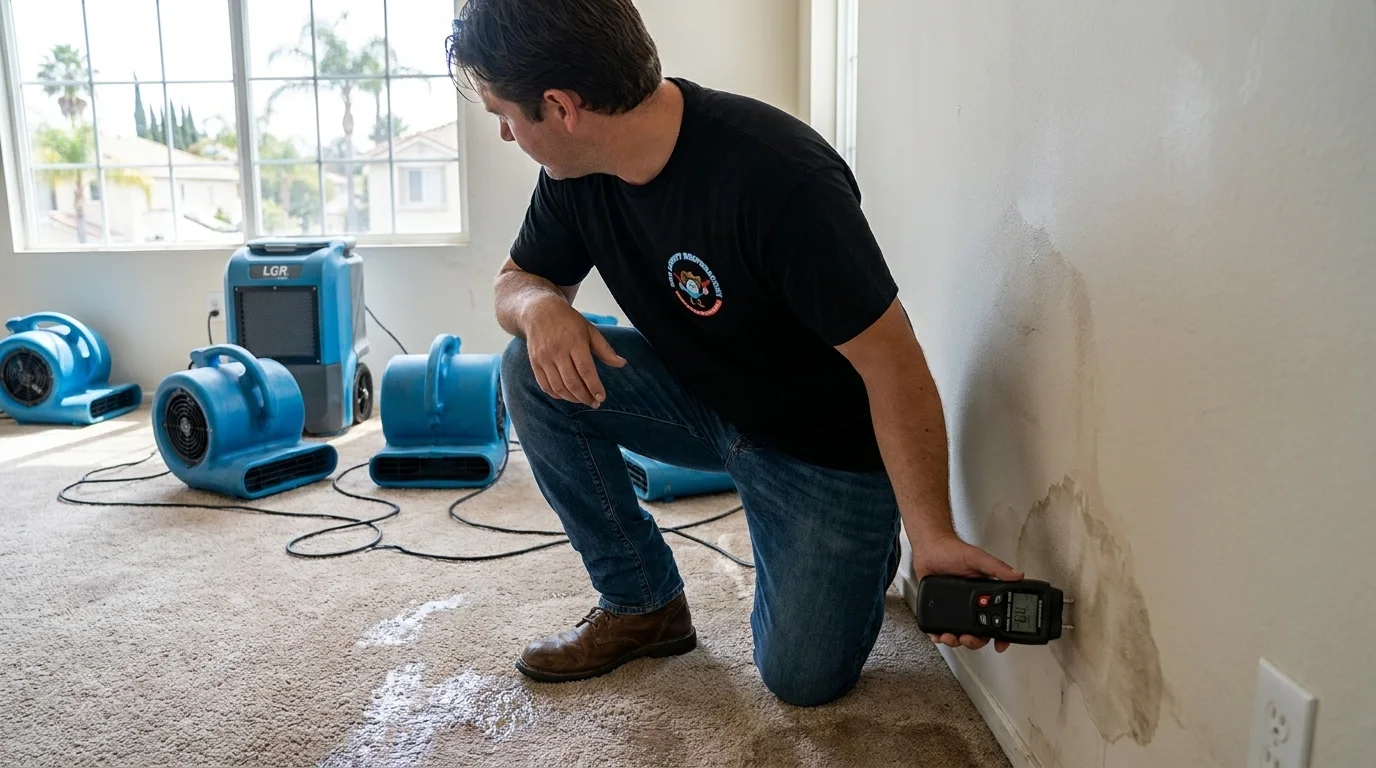
We start by finding the actual water path, not just the visible damage, using moisture meters and thermal imaging to track how far water has moved under flooring, through baseboards, or inside slab penetrations. On properties with detached garages, barns, or guest units, which are common in Villa Park, we check those structures separately since they’re often on their own plumbing branch and can hold hidden moisture even when the main house tests dry. Extraction comes next, pulling standing water from carpet, pad, and any low points before setting air movers and dehumidifiers calibrated to the room’s size and the material affected. Drying is monitored daily and documented against the IICRC S500 standard, which gives both the homeowner and the insurance adjuster a clear record of when materials actually reach dry standard rather than just looking dry on the surface.
Reaching Villa Park from Corona
We’re based out of Corona, and Villa Park sits close enough that our crews treat it as part of our regular coverage area rather than a long-haul call. Routes in are straightforward along the 91 and connecting surface streets, and because many Villa Park properties have gated entries, long driveways, or detached structures set back from the street, we call ahead to confirm access points before the truck arrives so we’re not losing time once we’re on site.
Villa Park Insurance & HOA Coordination
Most Villa Park properties are single-family and not subject to HOA architectural review for emergency mitigation work, but we still document everything the way a carrier or a review board would want to see it: photos before extraction begins, moisture logs throughout drying, and a written scope once the source is identified. For larger lots with barns, pool houses, or guest quarters, we itemize those structures separately in our documentation since some policies treat detached structures under a different coverage limit than the main dwelling. We work directly with most major carriers and can walk you through what’s typically covered before work starts.
Local note
One thing we watch for specifically in Villa Park: properties with well or septic systems on the older end of the lot, where a supply line leak near the system can be mistaken for septic backup and vice versa. Getting the source identified correctly before extraction starts matters here more than in a typical tract-home neighborhood, because treating a slab leak like a sewage event (or the reverse) changes both the equipment we bring and how we handle contaminated versus clean water categories under the S500 standard.
If you’re dealing with a leak, a burst line, or standing water anywhere on a Villa Park property, call Dry County Restoration at (951) 667-9910. Our crews are IICRC-trained in water damage restoration and structural drying, and we’re set up to handle the detached structures and larger lots that make Villa Park different from a standard suburban call.
Serving Villa Park from our Corona headquarters — ★ 5.0 · 91 Google reviews
“Easy to work with and did a wonderful job!” — Bre, September 2026Read our reviews on Google →
Water Damage Restoration in Villa Park: Service Coverage
Frequently Asked Questions
How fast can you arrive for water damage restoration in Villa Park?
How does Villa Park's large-lot, equestrian-zoned layout affect water damage response?
Are older Villa Park homes more prone to slab leaks?
Can you tell the difference between a slab leak and a septic issue on properties with well or septic systems?
What does the structural drying process look like for a Villa Park property with a detached structure?
Will my insurance cover water damage to a barn or guest house separately from the main home in Villa Park?
Water Damage Restoration response in Villa Park
Most Villa Park calls see a technician on-site within about 2 hours from our Corona headquarters.