TL;DR: Reconstruction is the rebuild phase that follows damage mitigation. Once water is extracted, fire debris is cleared, or mold is remediated, a licensed general contractor steps in to repair or replace drywall, flooring, cabinetry, framing, and finishes. In Fullerton and across Orange County, this phase is typically covered under the same insurance claim as the mitigation work, and having one company handle both sides simplifies the process significantly.
If your Fullerton home just came out of water mitigation or fire cleanup, you’re probably staring at open walls, bare subfloor, and a property that’s technically safe but nowhere near livable. That gap between “damage contained” and “back to normal” is exactly what reconstruction covers. It’s not a separate project you have to go find a contractor for. It’s the second half of the restoration process, and it should follow directly from the mitigation scope.
What Does Reconstruction Actually Include?
Reconstruction covers every trade repair needed to return a property to its pre-loss condition after a covered loss. That means drywall replacement, insulation reinstallation, flooring, painting, trim, cabinetry, tile, and sometimes structural framing. The scope is driven entirely by what the mitigation crew had to remove or what the damage destroyed.
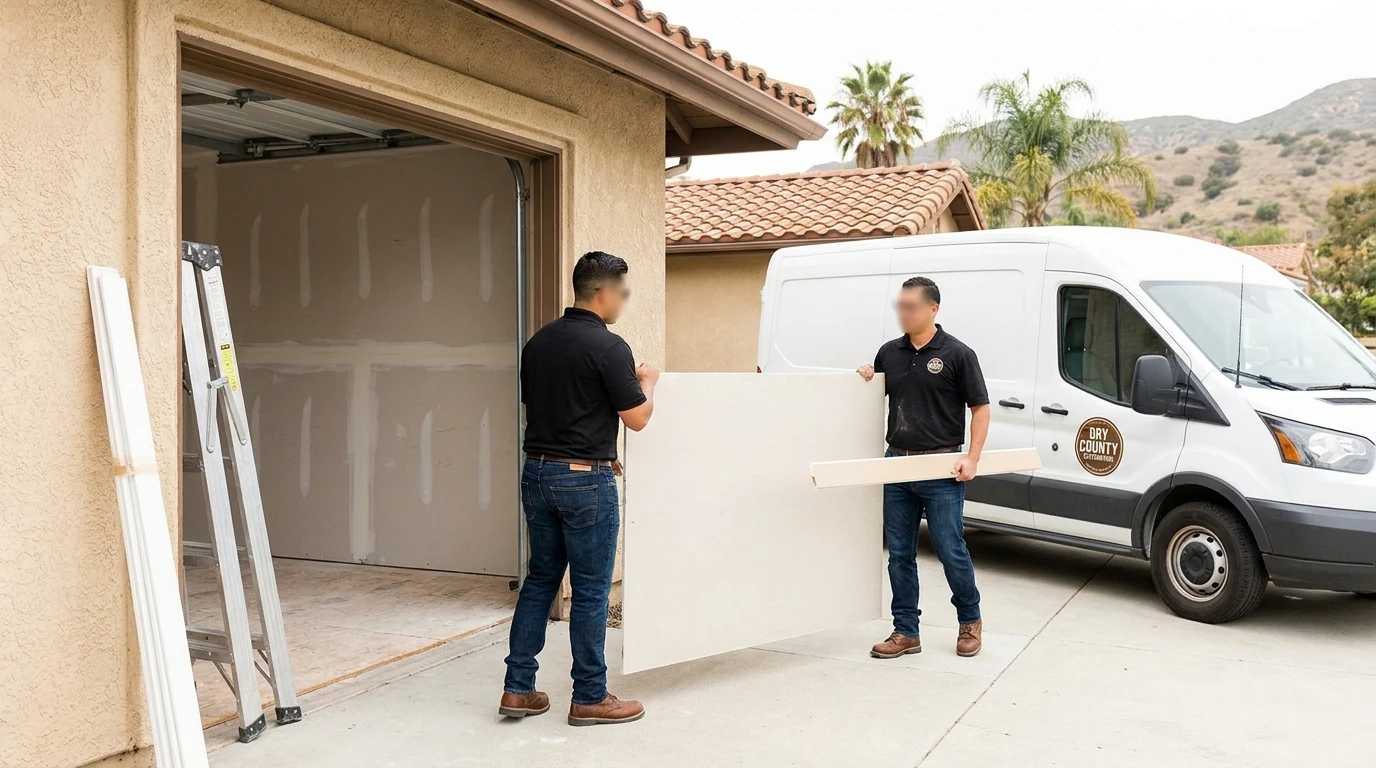
After a water loss, the mitigation team typically removes wet drywall to the flood cut line, pulls up saturated flooring, and extracts insulation from wall cavities. All of that has to be replaced. After a fire, the reconstruction scope can extend to charred framing, melted fixtures, and entire rooms of finishes. The insurance adjuster documents the damage; the reconstruction contractor builds the scope of work and matches it to the adjuster’s estimate line by line.
Common reconstruction tasks after a residential loss in Fullerton include:
- Drywall installation and texture matching (critical in older homes near downtown Fullerton where original textures are hard to replicate)
- Subfloor repair or replacement before new flooring goes down
- Insulation reinstallation to current California Title 24 energy standards
- Interior painting, including color matching to existing walls
- Cabinet and countertop replacement in kitchens and bathrooms
- Tile and hardwood flooring installation
- Trim, baseboards, and door casing replacement
- Fixture reinstallation (light switches, outlets, plumbing trim)
How Does Reconstruction Fit Into the Insurance Claim?
Reconstruction costs are almost always part of the same insurance claim that covered your mitigation work. Most standard homeowners policies in California cover “repair and replacement” of damaged structural components under the dwelling coverage (Coverage A). The adjuster’s estimate will include a line-item scope for both the mitigation phase and the rebuild phase.
The key document is the Xactimate estimate your adjuster or your contractor produces. Xactimate is the industry-standard pricing software that adjusters and restoration contractors both use. When your reconstruction contractor works from the same estimate, line-item disputes are easier to resolve because everyone is speaking the same language.
A few things to know about the insurance side of reconstruction:
- Recoverable depreciation: If your policy pays actual cash value (ACV) initially, you may be able to recover the withheld depreciation once the work is completed and you submit proof. This is called a “recoverable depreciation” or “replacement cost value” (RCV) payment.
- Supplements: If the adjuster’s original scope missed items (common with hidden damage revealed during demo), your contractor can submit a supplement to add those line items before work begins.
- Matching: California has strong matching standards. If your adjuster is trying to replace only the damaged portion of a floor or wall when the rest can’t be matched, your contractor can argue for full replacement of the affected area. This comes up often with hardwood floors and patterned tile.
- Mortgage lender involvement: If you have a mortgage, your lender is typically named on the insurance check. You’ll need to endorse the check through your lender’s loss draft department before funds are released.
For more on how homeowners insurance interacts with restoration work, see our post on Does Homeowners Insurance Cover Water Damage?
What Is the Reconstruction Process, Step by Step?
Reconstruction follows a defined sequence. Skipping steps or rushing the order creates problems that show up later, sometimes years later.
1. Scope review and permit pull (Days 1-5) The contractor reviews the adjuster’s estimate, walks the property, and identifies any gaps. If structural work is involved, a building permit is pulled from the City of Fullerton Building Division. Permits are required for structural framing, electrical, and plumbing work in California. Work done without permits can create title problems when you sell.
2. Rough-in trades (Week 1-2) If framing, electrical, or plumbing was damaged, those trades go in first while walls are still open. This is the phase where inspections happen. Fullerton Building and Safety requires rough-in inspections before any drywall is installed.
3. Insulation (Week 2) Insulation goes in after rough-in inspections pass. California Title 24 sets minimum R-values for wall and ceiling insulation. A restoration contractor familiar with California code will install to current standards, which may be higher than what was originally in the wall.
4. Drywall (Weeks 2-3) Hang, tape, mud, and texture. Texture matching is a craft skill. Orange County homes from the 1970s through the 1990s often have skip-trowel or knockdown texture that requires an experienced hand to replicate convincingly.
5. Paint (Week 3) Primer coat first, then finish coats. Color matching to existing walls is done with a spectrophotometer or by pulling the original paint spec if available.
6. Flooring (Week 3-4) Hardwood, tile, LVP, or carpet goes in after paint. Flooring is always last in the sequence because it protects the subfloor from trade traffic during the earlier phases.
7. Cabinets, countertops, fixtures (Week 4) Kitchen and bath reconstruction includes cabinet installation, countertop templating and fabrication, and fixture reinstallation. Custom countertop fabrication (quartz, granite) adds 1-2 weeks to this phase.
8. Final inspection and punch list (Week 4-5) The contractor walks the property with the homeowner, documents any items that need touch-up, and completes them before final payment is released.
Total timeline for a typical single-room water damage reconstruction in Fullerton: 3-5 weeks. A multi-room fire reconstruction can run 8-16 weeks depending on scope and permit timelines.
Why Does It Matter Who Does Your Reconstruction?
The contractor who handles your reconstruction needs to understand the insurance claim process, not just the build process. A general contractor who has never worked a restoration job will struggle with Xactimate line items, supplement negotiations, and the documentation requirements adjusters expect.
There is also a practical coordination argument. When the same company that handled your mitigation also handles reconstruction, they already know what’s behind the walls. They saw what the demo revealed. They know where the moisture readings were elevated and where the drying logs showed extended dry times. That context matters when you’re rebuilding.
In Fullerton, properties near the Brea Dam Recreation Area and older neighborhoods around Cal State Fullerton tend to have housing stock from the 1960s and 1970s with original plumbing, original electrical panels, and original insulation. Reconstruction in those homes often surfaces deferred maintenance items that need to be addressed alongside the insurance scope. An experienced reconstruction contractor flags those items early rather than discovering them mid-project.
If you’re at the point where mitigation is wrapping up and you need a written reconstruction scope, the right next step is scheduling a walkthrough with a licensed contractor before the adjuster closes the claim. Changes to the scope after the claim is closed are harder to get approved.
Dry County Restoration handles both mitigation and reconstruction under California Contractor License 1083555, serving Fullerton and surrounding communities across Orange and Riverside counties. If your property is coming out of a loss and you need a reconstruction estimate, call (951) 667-9910 to schedule a walkthrough.
About Dry County Restoration
Dry County Restoration is an IICRC Certified Firm serving Fullerton, Corona, Riverside, Anaheim, and surrounding communities in Orange and Riverside counties since 2020. The company holds IICRC certifications in Water Damage Restoration (WRT), Applied Structural Drying (ASD), and Applied Microbial Remediation (AMRT), and is licensed and insured under California Contractor License 1083555. Services include water damage restoration, fire damage restoration, mold remediation, storm damage restoration, sewage cleanup, emergency board-up and tarping, contents restoration, and general contracting including post-loss reconstruction.
Video Transcript
Your home survived the damage. But now you’re staring at open walls and bare floors. That gap between safe and livable? That’s what reconstruction covers. Reconstruction is the rebuild phase that follows mitigation. Once the damage is cleared, a licensed contractor steps in to put everything back. After water damage, crews remove wet drywall and saturated flooring. All of that has to be replaced, properly and in the right order. Reconstruction covers drywall, insulation, flooring, paint, tile, cabinets, trim, and fixtures, everything needed to return your home to pre-loss condition. The good news: reconstruction costs are almost always covered under the same insurance claim as your mitigation work. One claim, one process. Your contractor works directly from the adjuster’s Xactimate estimate. That keeps everyone on the same page and reduces disputes over what’s covered. First comes framing, electrical, and plumbing, while walls are still open. Inspections happen before anything gets closed up. Then insulation, drywall, texture matching, paint, and finishes. Texture matching is especially tricky in older Orange County homes, experience matters. When one company handles both mitigation and reconstruction, you avoid delays, miscommunication, and starting the contractor search from scratch. Ready to get your home back to normal? Call Dry County Restoration at 951-667-9910 for a free estimate. We handle both sides of the process.